
The Myth of "De-optimization"
Fitting into [Bracket 2]

Abstract
So many times I hear people say that they want to de-optimize their deck because it’s winning too much, or it’s not fitting well into its bracket… but, in general, I think that framework is missing the point.
The framework that you have to “de-optimize” to fit into lower brackets is built on a faulty presupposition. It’s built on the idea that the only thing one can or should optimize towards is winning.
All things considered, the Mrs. Piggle-Wiggle remedy to “a deck that wins too much” is not to “de-optimize,” it’s to find other things to optimize towards.
That’s it.
That’s the point of this article. You can safely stop reading at any time now… or you can listen to me rant. The power is yours.
Multi-Objective Optimization
A Multi-Objective Optimization problem can be broadly defined as: any situation where you have more than one goal to optimize for, but any single solution does not optimize towards each goal.
Often the goals are competing goals, and without defining a subjective preference, the number of solutions could be infinite.
Exempli gratia: a restaurant wants to deliver high-quality and delicious food, with an attractive dine-in venue, but they are also incentivized to spend as little as possible on the venue, the staff, and the food itself. Further, they have a set amount of capital to spend — so if they spend more on food they have to spend less on staff and venue. How do they decide how much money to allocate to each feature and how much to keep as profit? There’s potentially infinite solutions and ultimately the preferences of the owner will decide.
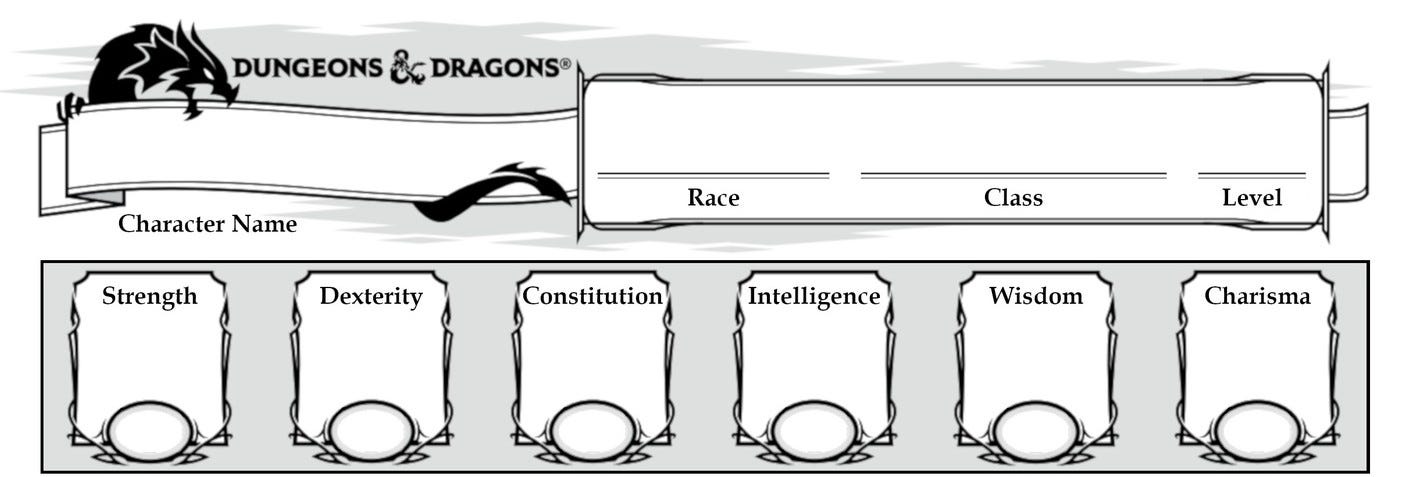
Another common example: any game that requires you to choose stats! Each stat optimizes towards a certain set of character actions, and (especially with point-buy systems) each point you spend towards one stat directly reduces the amount you have left to spend on other stats.
People face a plethora of multi-objective optimization problems in everyday life: from deciding how to allocate your money, to deciding what’s for dinner, or how to spend the hours and minutes of your day. Infinite solutions, infinite features to optimize towards, and ultimately preference will decide.
Even things that seem like simple problems are actually often multi-objective optimization problems in disguise. A goal like “I want to drink less for my health” seems straightforward, but in reality it adds just one more goal to optimize towards with your actions. When you hang out with friends… will you optimize towards that goal? Or will you optimize towards "socialization” and “fitting in?” If you simply decide you are bad for failing to drink less, you are missing the bigger picture and are unlikely to make much progress… But if you instead choose to figure out which objectives you ARE optimizing towards, and if you can accomplish that same objective without your old habit (such as getting plenty of socialization without drinking), you will often be much more effective at changing your habits.
It’s about time that I remind you this is an EDH blog (despite what some recent posts may have you believe), and reel it back in to talk about EDH…
Back On Topic
How does multi-objective optimization fit into magic? Simple: building a deck is a “stat select” screen, and there are many objectives you can build towards with your card inclusions. How you build can also create many different outputs you can measure.
In real life, we may not get to play enough games to realistically see the effects of individual cards, so we have to start with an unrealistic assumption for illustration purposes: let’s assume you can simulate the wins of your deck over 1000 fishbowls, and each time that you change a card you can repeat this simulation to see what has changed. For simplicity let’s start with two measurable stats: the average turn you win on (add all your winning turns, divide by 1000), and the consistency of winning turn (the standard deviation among winning turns). Then we can start considering how each card might affect these stats.
Sol Ring is a good example, because it’s a strong ramp spell known for sending you a few turns ahead in the early game. It’s reasonable to assume it would slightly decrease the average turn you win by, since it would let you win faster on the games you draw it… but it’s also reasonable to assume that it would increase the inconsistency since there is now more of a gap between your faster wins (where you draw it) and your slower wins (games where you don’t). So the answer is easy:
Since it’s reasonable to assume that winning earlier means less chance of being interrupted in an average game, if you’re optimizing for win-rate, you should include it.
Since the increased variance of output means that your deck may feel like it’s operating at different paces at different times, if you’re optimizing for playing at a certain pace consistently, you should probably cut it.
I mentioned in my article about Load Leveling that I think consistency of pace is really important to EDH (making this my second article that touches on why I feel most decks should NOT run Sol Ring)… and if you read that (or are following along and thinking ahead), you may realize there’s another option:
If you want to optimize for win-rate AND consistent pace, and you have no particular preference about what that pace should be… you should include Sol Ring AND a bunch of another fast-mana so that your deck can consistently run on the faster clock Sol Ring can offer it.
As with the example of a restaurant owner trying to allocate limited funds to make the best possible restaurant they can, with 100 cards there are many possible combinations that are somewhere between “optimizing for a high win-rate and optimizing for a perfect pace.” Also like the example with the restaurant, the balance that you ultimately settle on will mostly have to be decided on preference.
In EDH, a big part of declaring our preference is selecting which [bracket] we are playing in. Selecting a bracket IS declaring a preference.
Retaliation Rule
The subtitle for this article is “Fitting into [bracket 2]” but, before we get into what exactly we should be optimizing for in order to do so, we have to establish a few more concepts. The first concept is the golden rule: treat others how you want to be treated.
This rule applies anywhere and everywhere, it’s not specific to [bracket 2]. If you don’t want people to yell at you, don’t yell at other people. If you don’t want to people to call you names, don’t call other people names. Good for gander, good for goose. But this rule applies differently depending on where you’re at and what activity you’re participating in. In brackets: a [bracket 5] player might say “I want other players to play to the best of their ability, so I will play to the best of my ability too” where a [bracket 2] player is more likely to say “I don’t want other players to win via combo, so I won’t combo out either.“
This all seems obvious enough, but there are two things you need to know:
Any time you do something in a game, you are signaling to others that “I consider this thing I’m doing as fair game, so it’s fine if you do it to me” (sometimes even “I consider this thing I’m doing to be ideal, so I prefer if you do it to me“)
A converse property can apply: in social settings, optimizing towards “not getting staxed out” and optimizing towards “not staxing others out” are often the same optimizations — “I don’t want people to do this to me, so I won’t do it to others”
It’s important that we keep this in mind when choosing what cards to include in or exclude from our decks.
Goodhart’s Law
Goodhart’s Law is one of those adages that seem to describe reality quite well:
When a measure becomes a target, it ceases to be a good measure.
In this world, taking a measurement is our most reliable way of directly understanding reality. But something funny happens when we take a measurement and then decide to alter our actions to to increase the measurement… The law has a common parable to explain how it can work:
Supposedly, 100+ years ago, in a British-ruled part of India… a rising population of venomous cobras was an enormous issue. The British government decided to offer a bounty for heads of dead venomous cobras.
At first this worked out well. The locals killed cobras and brought their heads in. The number of heads brought in was an accurate representation of the reduction in cobra population.
That is… until people started to breed cobras to sell their heads.
This type of Goodhart’s Law is often referred to as Perverse Incentive or the “Cobra Effect”
Goodhart’s Law is present in EDH deck-building when we build towards certain goals. We often think that how good your experience is depends on mechanical things like your ramps or card draw, and may target that by trying to ramp or draw more — but when that becomes the target and we optimize for it, we can end up having a worse experience… because we sacrifice “other goals” like the pace of the game.
Optimizing FOR [Bracket 2]

This is the most up to date version of the commander bracket system (at time of writing)… and it actually tells us exactly what outcomes we’re trying to optimize for in each bracket. For [bracket 2], it advises that we should optimize towards:
Decks that are mechanically focused — a pile of unplayable cards isn’t really “fun,” we do want the deck to have a gameplan to showcase and be able to generally interact with the game
Being able to find space for pet cards — when cards are too strong and fast on average, it’s hard to find room for the fun cards we like, so we tend to avoid many generically strong cards that may outshine more niche choices and push them out of the overton window of “playability”
Telegraphed, incremental win conditions — we don’t usually like games to end out of nowhere or in a way that is unreasonably hard to interact with, so we avoid running things like combos that cause sudden wins and can sometimes only be stopped with counterspells (the fact that wincons are slower and telegraphed means we also have to make concessions that make space for those wincons: board wiping every turn, for example, would make wincons that need to stick around for several turns impossible to use and make games miserable)
A low pressure environment — we aren’t really here to be on-edge all the time about possibly making a “technically incorrect” play, so we don’t want to play cards that really punish opponents too heavily for not making the technically best decisions at all times
A considerate environment — we think about what effect cards have on the social situation, whether they increase the fun or suck the energy out of the pod (which also means we ask if the games feel fair and we have close to a fair 25% winrate, or are winning too much or too little)
Giving other players a fair shake at showcasing their plan — we don’t really want to be shut out of our gameplan entirely, so we’ll try avoid cards that do it to others… this also means avoiding “all or nothing” strategies where “showcasing the plan” necessarily means winning (thus forcing our opponents to prevent us from showcasing our plan, lest they lose on the spot)
Not killing players before their 8th turn — when things are slower to make room for more pet cards and more relaxed-feeling gameplay, dying early can make you feel like you don’t have a chance to play… so we try not to kill others too early
I really wish I had a little bit more for you. I wish I had some hidden Illuminati truths about what [bracket 2] players want to spill to you... But it’s shrimple as that: if you optimize towards the objectives present in the guidelines… you’ll fit well into [bracket 2] games even when you’ve built a strong deck. But that also means you have to de-emphasize optimizing towards a high win-rate, or making the strongest plays as often as possible.
Conclusion: Build To your Bracket
For me, there’s only one real conclusion that I’m always trying to point out:

You don’t compete in [bracket 5 — cEDH] by throwing together a pile of cards and asking a stranger “hey what bracket does this deck fit into?” You compete in [bracket 5 — cEDH] by researching how the cEDH meta plays and building something intentionally towards it.
Similarly, you don’t make a pleasant [bracket 2] experience by building a deck in a vacuum and then asking Reddit “is this [bracket 2] or [bracket 3]?” You make a pleasant [bracket 2] experience by intentionally targeting and optimizing FOR the experience laid out by the description (Which also means that, if you have a deck that plays a bit too rough for [bracket 2], you know exactly what you have to target your optimizations towards).
If you find it difficult to break the habit of “optimizing for winning,” the venerable Joey Schultz presides in an EDHREC CAST episode about some ways to specifically pull away from high-win-rate optimizations… Many of those suggestions are amazing and direct ways to reduce power.
And with that, I bid you adieu.
Until my next post,
Find me sailing the Bluesky,
Or pick up a free sub: